
Attendees explored artificial intelligence, workforce development and local approaches to economic growth.
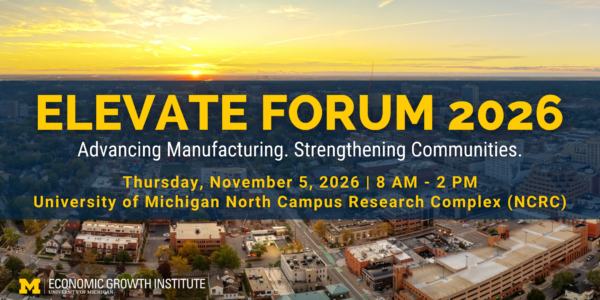
Elevate Forum 2026 brought business leaders and community development professionals to the University of Michigan’s North Campus Research Complex on November 5 for a day of learning, collaboration and practical problem-solving. Under the theme “Advancing Manufacturing. Strengthening Communities,” the forum explored how businesses and communities can respond to change and turn ideas into action.
Two parallel morning tracks offered presentations, panel discussions and interactive sessions tailored to each audience.
Building a practical path to AI in manufacturing
The business leaders track focused on helping manufacturers approach artificial intelligence with a clear purpose and a practical plan. Vikesh Chandrashekar, senior project manager at the Economic Growth Institute, introduced a four-stage AI roadmap designed for small manufacturers. His presentation provided a framework for assessing where companies stand in their AI journey and identifying one or two practical next steps. Stephanie Ludwig, the institute’s director of industry programs, highlighted funding and technical assistance for Michigan manufacturers.
Cheryl Thompson, principal advisor at Cheryl Thompson Advisory, guided a session on manufacturers using AI in practice. Matt Ayres, program manager at Simco Ltd., shared applications in sales and marketing; Shawn Gutierrez, chief executive officer of AtomTech, addressed payroll and billing; and Satvik Kapoor, co-founder of J4S / Morsa, explored operations management. These examples illustrated how AI can address everyday business needs.
The workshop “From Bottleneck to Built,” led by Thompson, connected those discussions to practice, exploring how to build an AI system around a shared operational challenge.
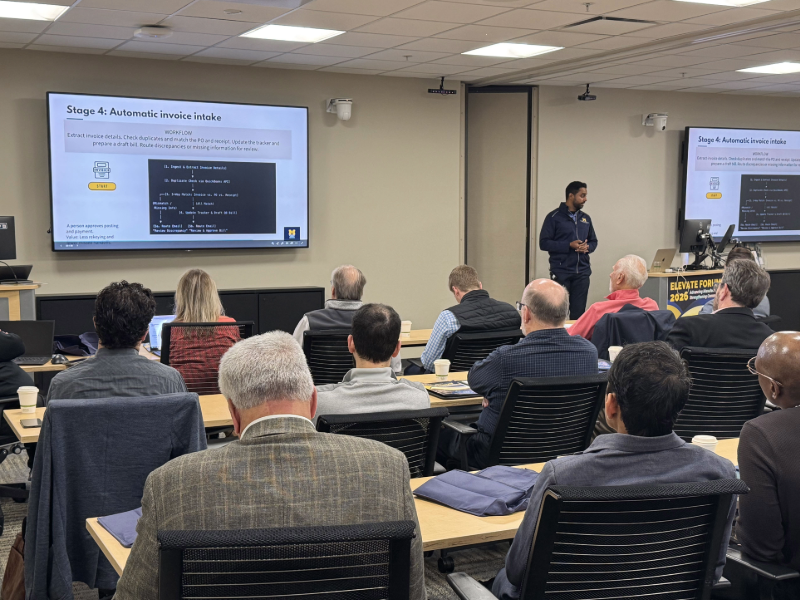
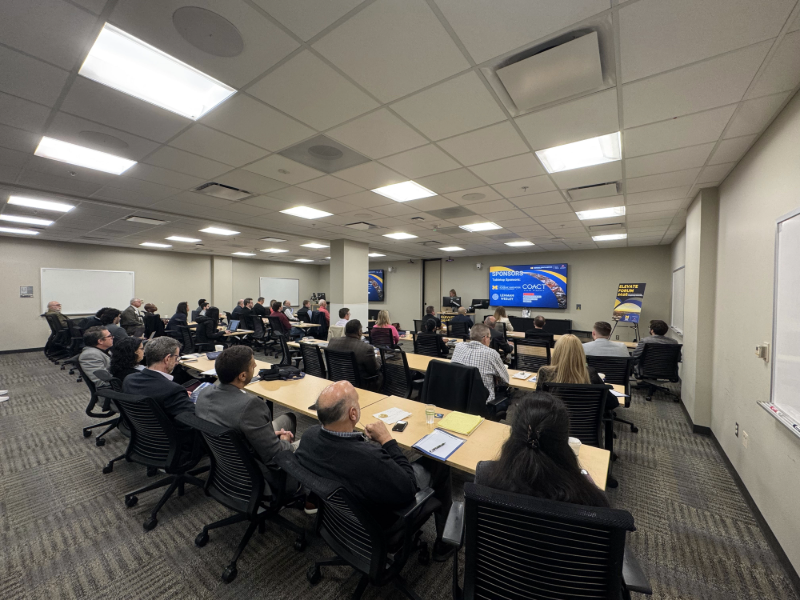
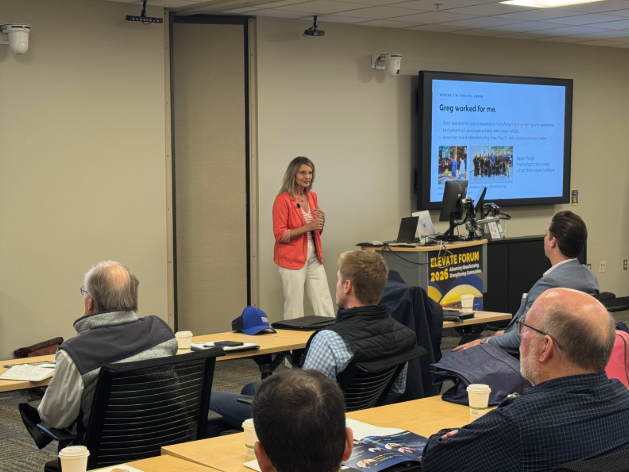
Jared Katzman, a doctoral candidate at the University of Michigan School of Information and co-founder of Motor City Commons, saw the turnout as a sign of strong interest in practical AI education.
“What struck me most was how full the room was. The manufacturers I spoke with afterward were eager to understand how AI could actually work in their shops, which tells me there’s real demand for practical, grounded education in this space.”
Jared Katzman, PhD candidate, U-M School of Information, co-founder Motor City Commons
Katzman also emphasized that AI is no substitute for sound fundamentals. The companies that benefit, he noted, are those that invest in responsible data practices and involve the workers who know their processes best.
Connecting community priorities with workforce opportunities
The community development track explored how local leaders can address shared challenges while building on their communities’ distinct strengths. Carmen Wells Quigg, the Economic Growth Institute’s director of community development, shared lessons from 11 Michigan communities navigating the electric vehicle industry transition. Jeffrey Hoang, director of Michigan Clean Cities, offered perspectives on the evolving clean transportation landscape.
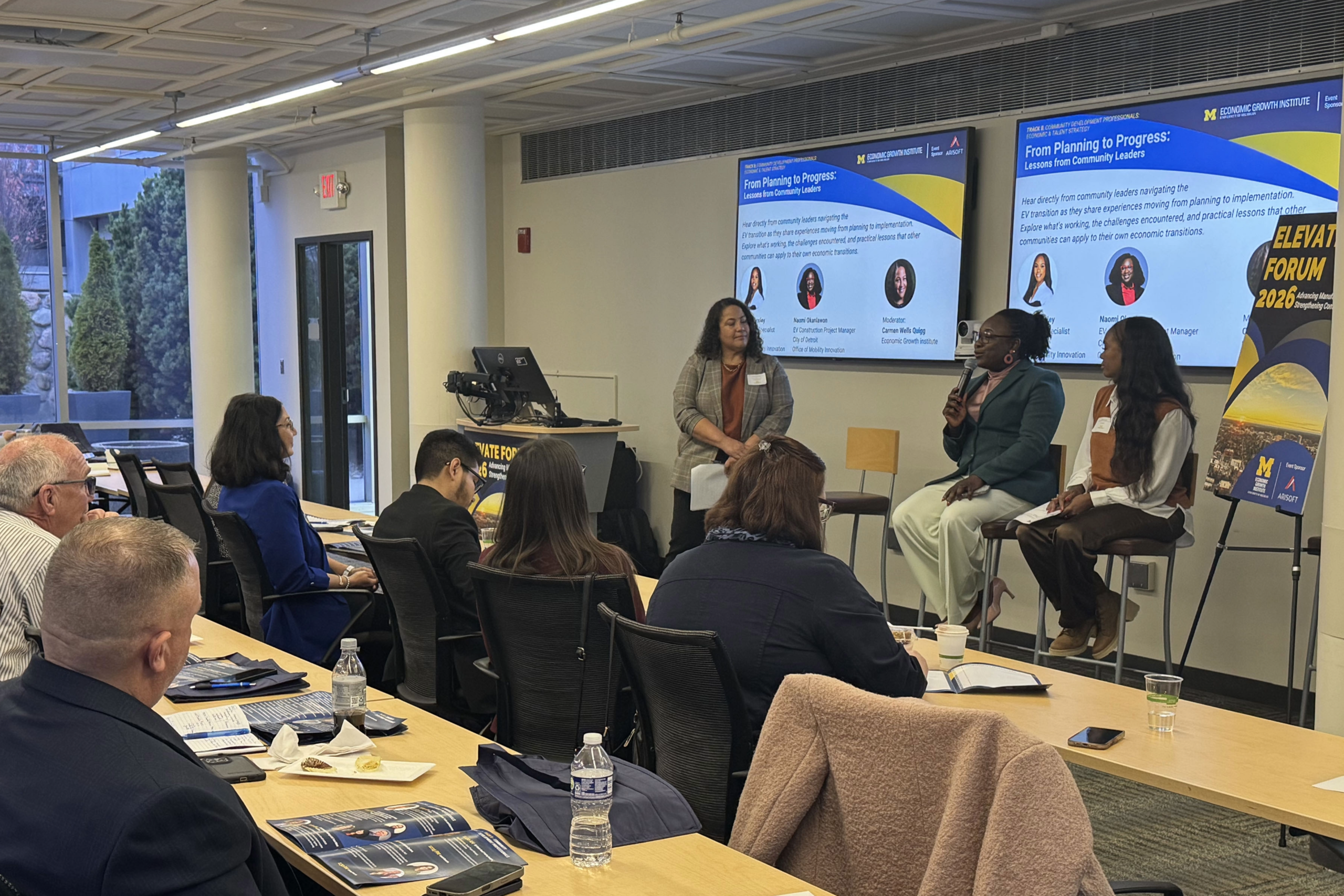
A panel moderated by Wells Quigg featured Naomi Okanlawon, electric vehicle construction project manager, and Yonikka Tinsley, clean fuels specialist, both with the City of Detroit Office of Mobility Innovation. They shared experiences moving from planning to implementation and practical lessons for communities navigating economic transitions.
A second panel examined River Rouge’s approach to connecting community vision with workforce strategy. Moderated by Jessi Kittel, the institute’s workforce development lead, the discussion featured Darryl Folks II, small business coordinator at Downriver Community Conference; Keith Sabuda, economic development director for the City of River Rouge; and Alysha Albrecht, director of strategic communications, compliance and operations. These conversations emphasized identifying local workforce needs, building on existing resources and connecting residents with regional training and employment opportunities.
Jeremy Kailing, a graduate student at the University of Michigan’s Taubman College of Architecture and Urban Planning, presented planning and communications tools and community success stories.
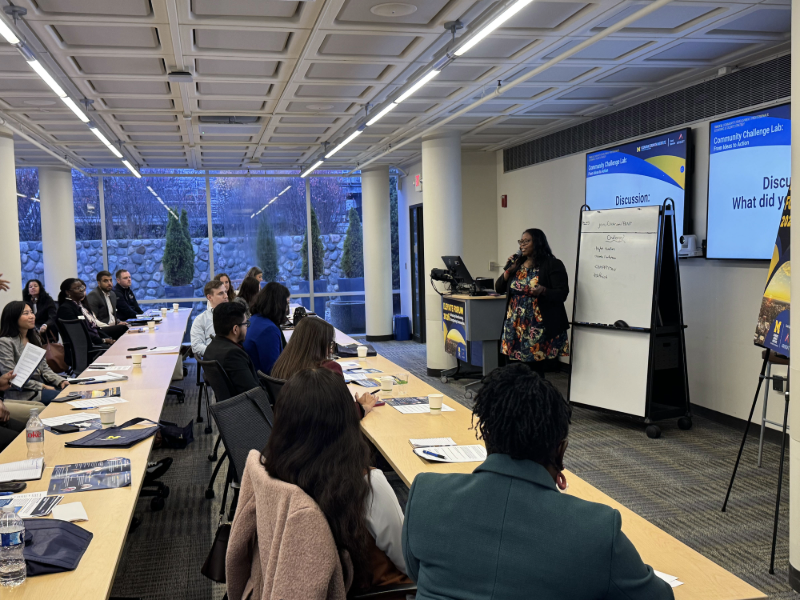
In the “Community Challenge Lab: From Ideas to Action,” led by EGI’s LaTricia Mitchell, facilitated small-group discussions provided an opportunity to exchange experiences, work through local challenges and identify practical next steps. Mary Ammerman, senior project manager at the institute, led a final track session encouraging participants to connect the day’s insights to their own economic and workforce priorities.
Tony Willis, chief equity development officer at the Lansing Economic Area Partnership (LEAP), pointed to the interactive exercise as a highlight of the community track.
“The highlight of the day was the scenario based interactive learning exercise. It allowed for both peer connection, along with team building in addressing, planning, and solving real scenarios that we in the profession are tasked to handle. I walked with new connections and several tactics to put into practice.”
Tony Willis, Lansing Economic Area Partnership (LEAP)
Matthew Vanisacker, deputy director of economic and community development and neighborhood services coordinator for the City of Monroe, highlighted the value of connecting with peers around shared regional priorities.
“Attending the Community Development Professionals track of Elevate was a great opportunity to connect with and hear from leading economic and workforce development professionals, exchange ideas, and explore actionable strategies to strengthen our communities. Regional growth takes collaboration, forward-thinking leadership, and a shared commitment to creating opportunities for businesses and residents alike.”
Matthew Vanisacker, City of Monroe
Bringing manufacturing and workforce development together
The two tracks reconvened for lunch and presentations that connected the day’s themes of manufacturing innovation and workforce development. Angela Accurso, director of workforce programs at MxD, presented findings from an Electric Vehicle Hiring Guide and Community Engagement Workforce Study, highlighting strategies for meeting the electric vehicle industry’s evolving workforce needs. Nick Khormaei of Neuramill explored how AI can streamline manufacturing programming tasks while preserving expert machinist knowledge.
Across both tracks, the forum gave business and community leaders opportunities to share practical approaches, learn from peers and consider how technological advances and workforce strategies can support one another.
The organizing team thanks all speakers and facilitators who volunteered their time and expertise.
Elevate Forum 2026 was made possible with support from event sponsor Arisoft and supporting sponsors COACT, the U-M Center for Academic Innovation, MMTC and Lehman Wesley.